I’ve been keeping small birds for more than a decade. They have all been of the same species of parakeet: the Pacific parrotlet.
Whenever I tell someone about them, I always start by saying, “A type of parakeet.” If I say “Pacific parrotlet” out of the blue, most people won't know what I’m talking about. Why the Pacific parrotlet? It’s simply because I happened to walk into a pet store that only sold them.
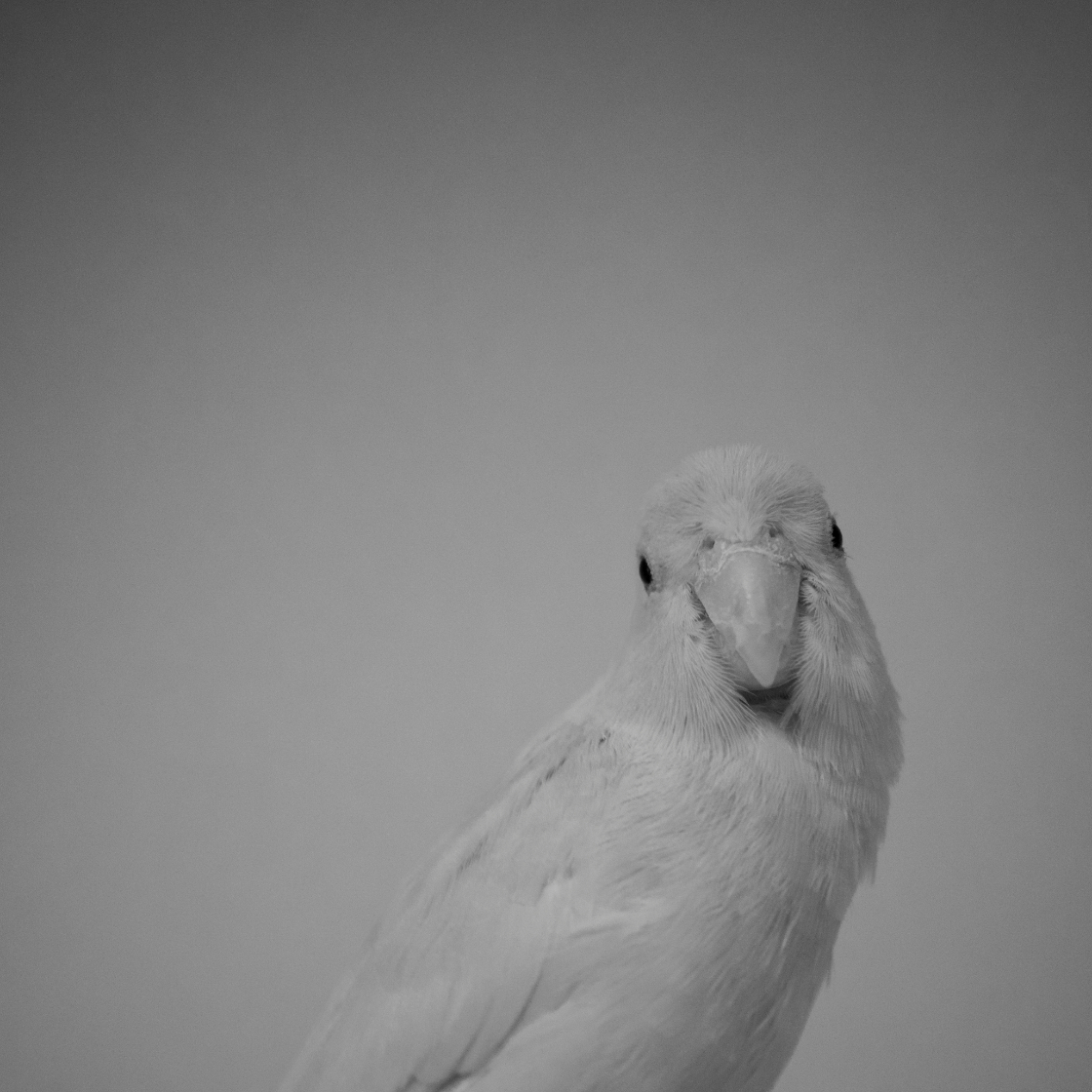
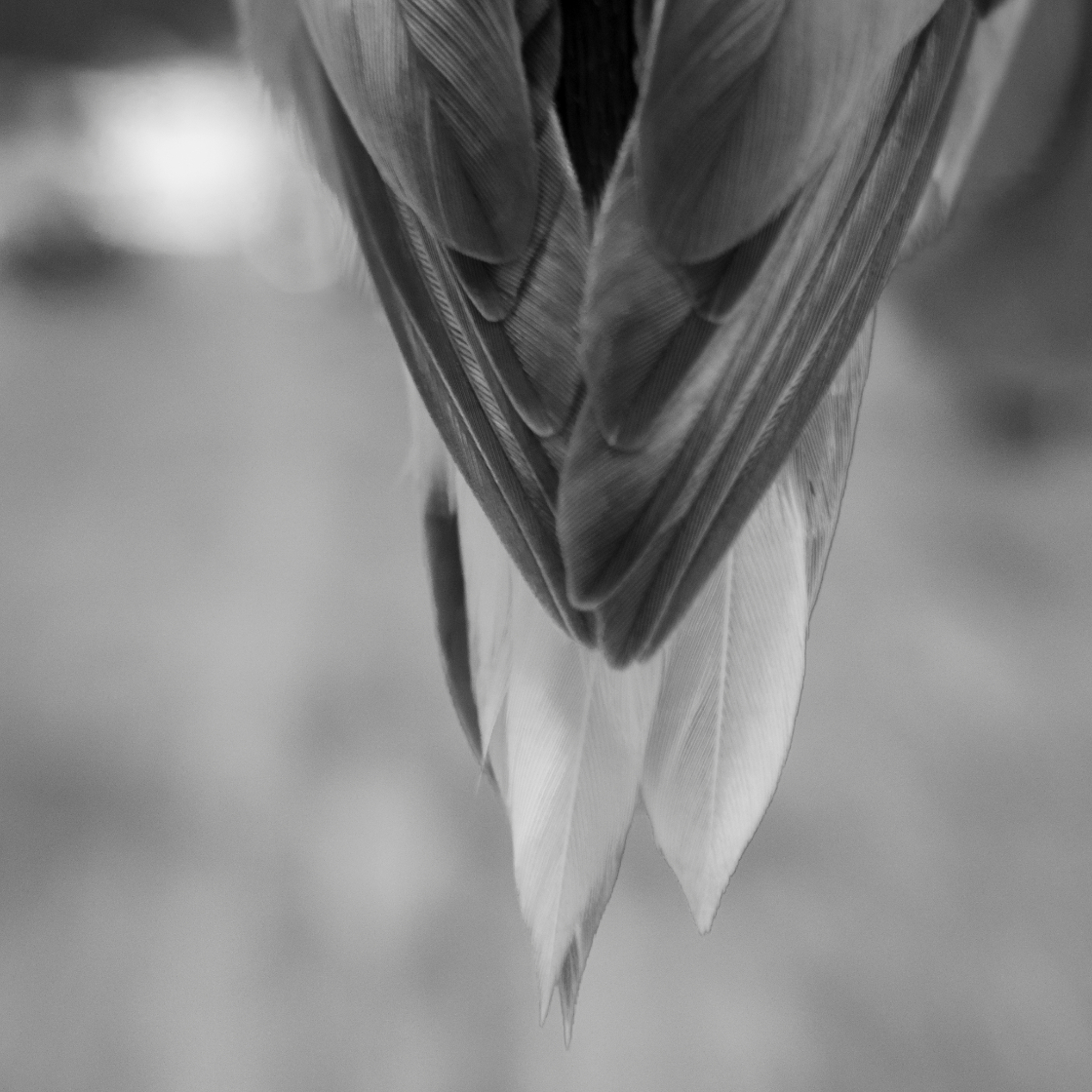
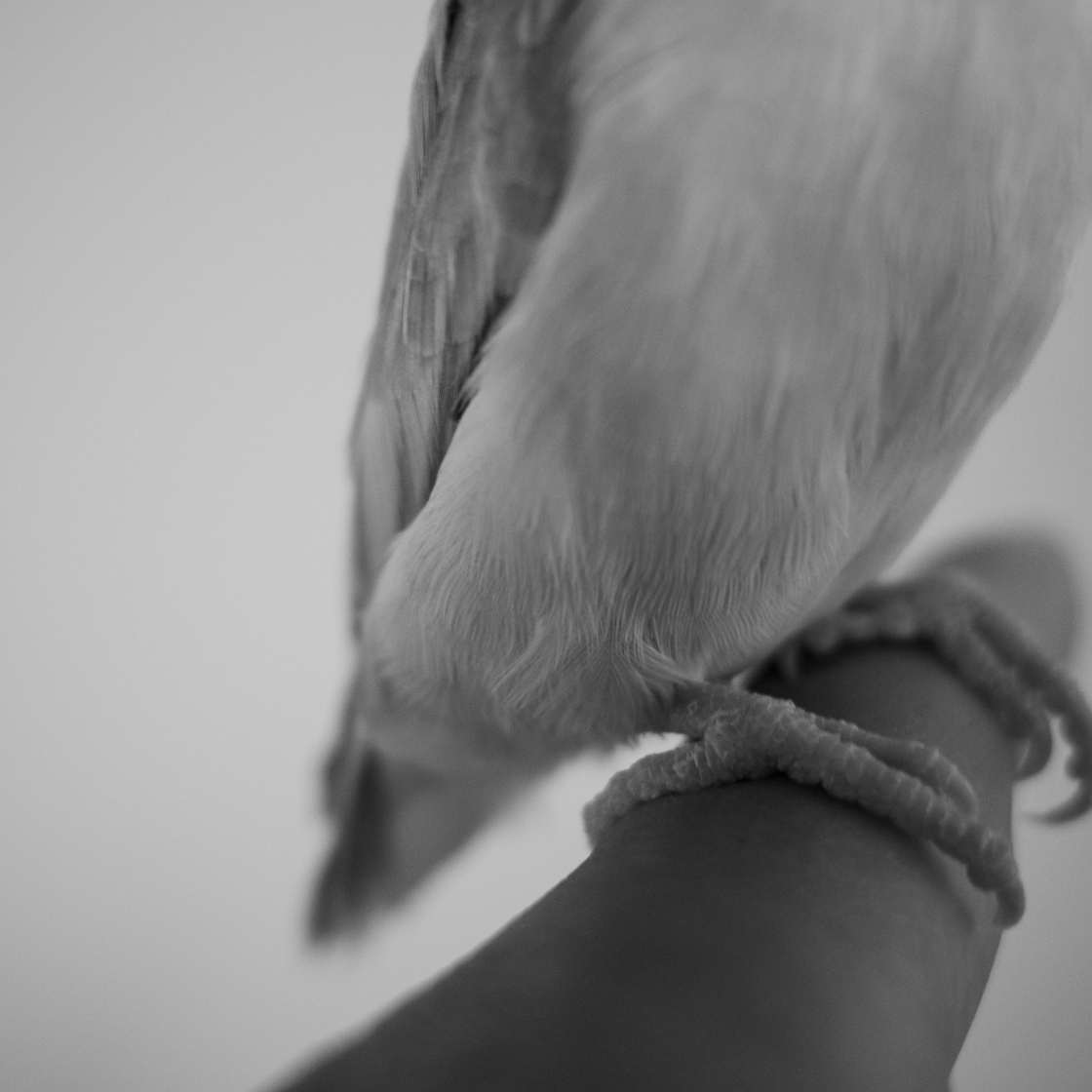
When I look up the Pacific parrotlet in guidebooks or online, I often find that it is described as a particularly feisty parakeet species. That’s certainly true—they sometimes bite my fingertips pretty hard. It’s disheartening when they bite me while I’m letting them out of their cage to feed them or placing food on a dish. It doesn't draw blood, but it hurts quite a bit. “How come you bite?” I find myself blurting out. But the next moment, they are perched on my shoulder acting as if nothing happened, so I end up forgiving them.
I have two of them now. They each weigh about 20 grams. Every now and then, I put them on my kitchen scale to check their weight, based on which I adjust their food portions up or down.
Their names are Sora and Ten. They are a male-female pair. I’ve had them for almost four years, which means they are about four years old. When I picked them out at the pet store, I chose them based on their feather colors and faces. However, I wasn’t sure if they would get along. Since they are a feisty breed, they could get into pretty intense fights if they didn’t get along.
Fortunately, these two get along really well. They are always together. On cold winter days, they huddle so tightly together that they almost look like a single bird. Before I started keeping them, I had no idea that birds could get along so well.
As I watch them, a phrase from a book by Saneatsu Mushanokoji that I read in my twenties naturally comes to mind, though it’s a bit old: “How beautiful it is to have good friends.”
Their entire bodies are covered in feathers, making them look fluffy, but their legs are quite reptilian. According to one theory, birds are descendants of dinosaurs—survivors of that era. I kind of believe that. It makes sense when I think about it that way. Their legs certainly remind me of dinosaurs. Sometimes it feels like their bodies and legs belong to two different creatures. That’s why I find them so photogenic.
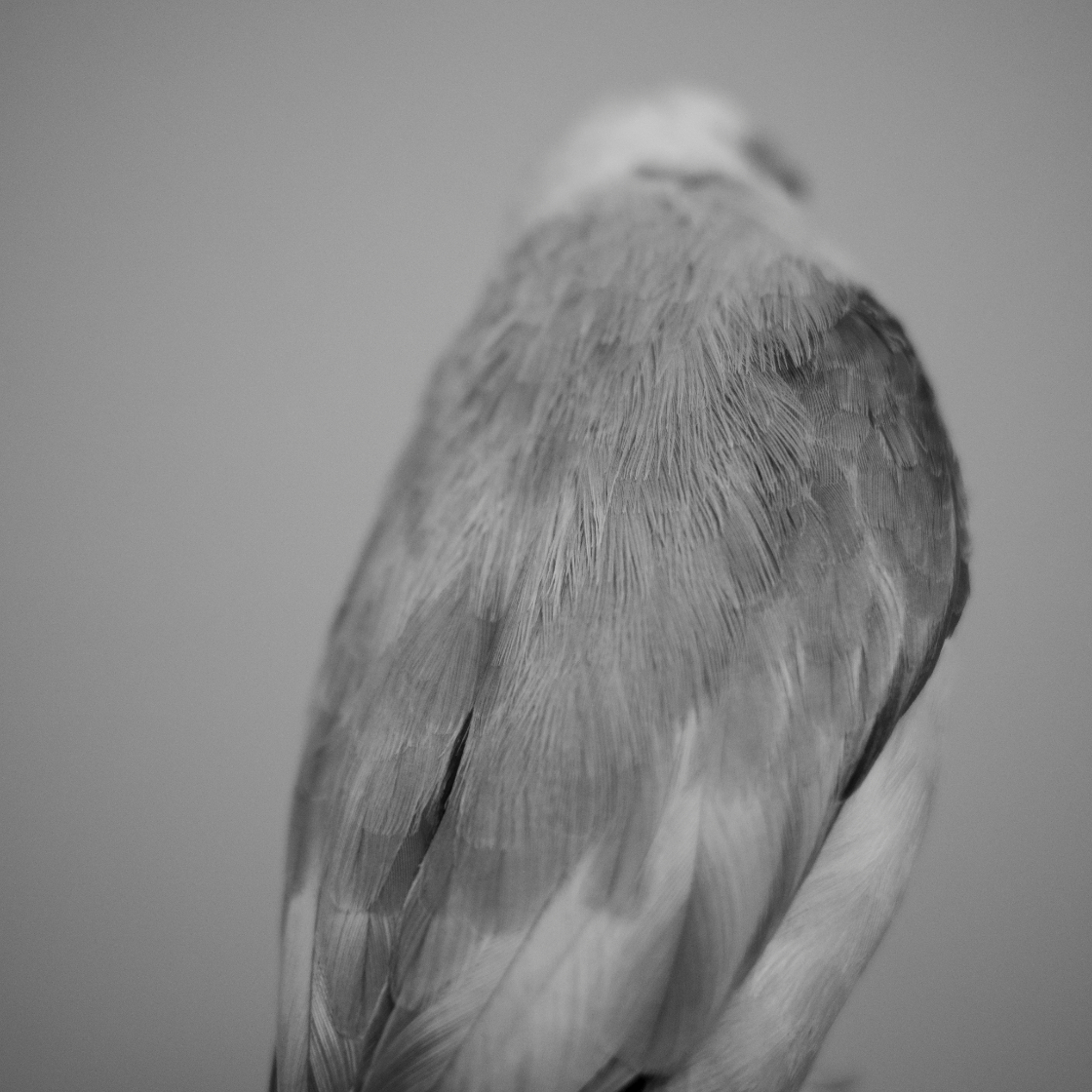
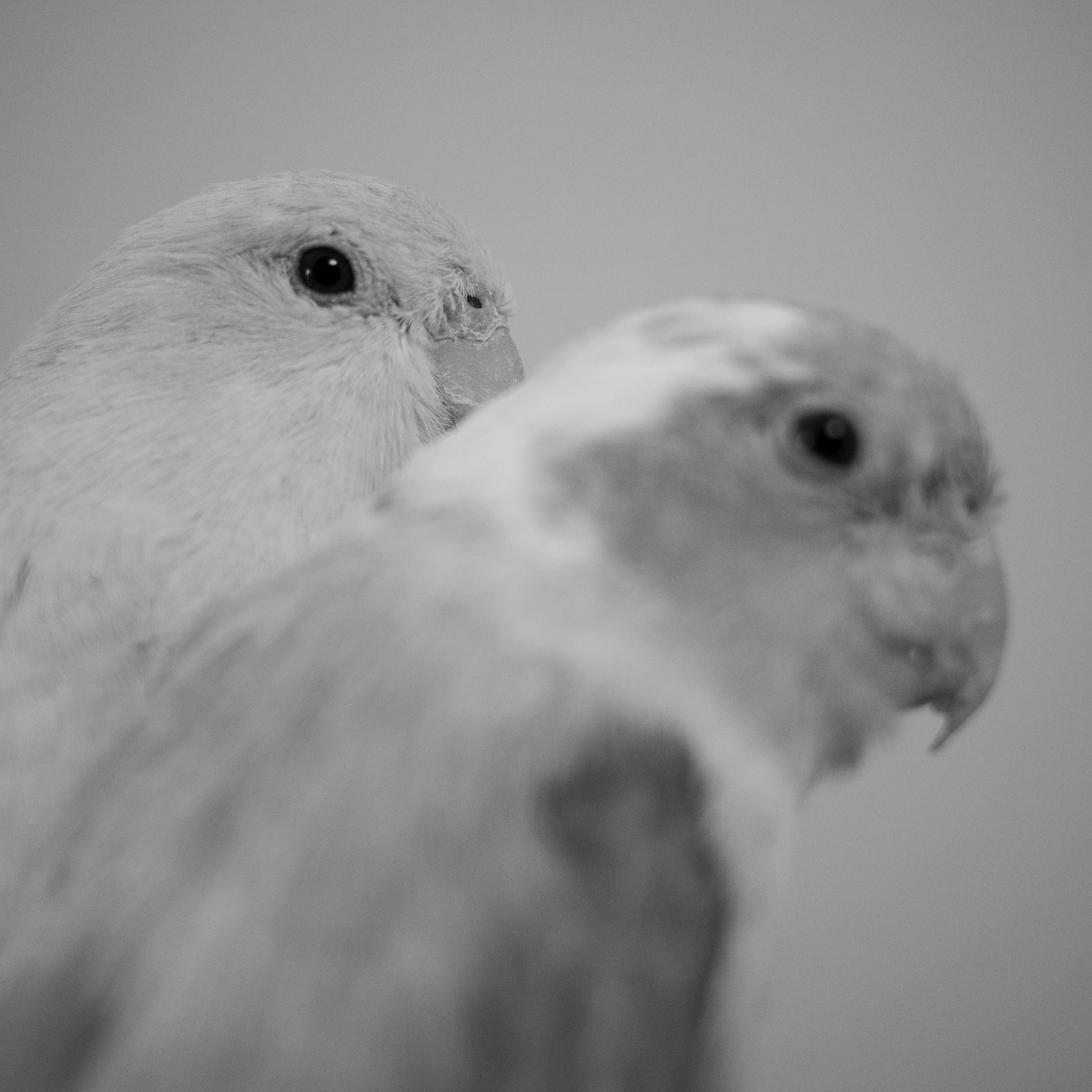
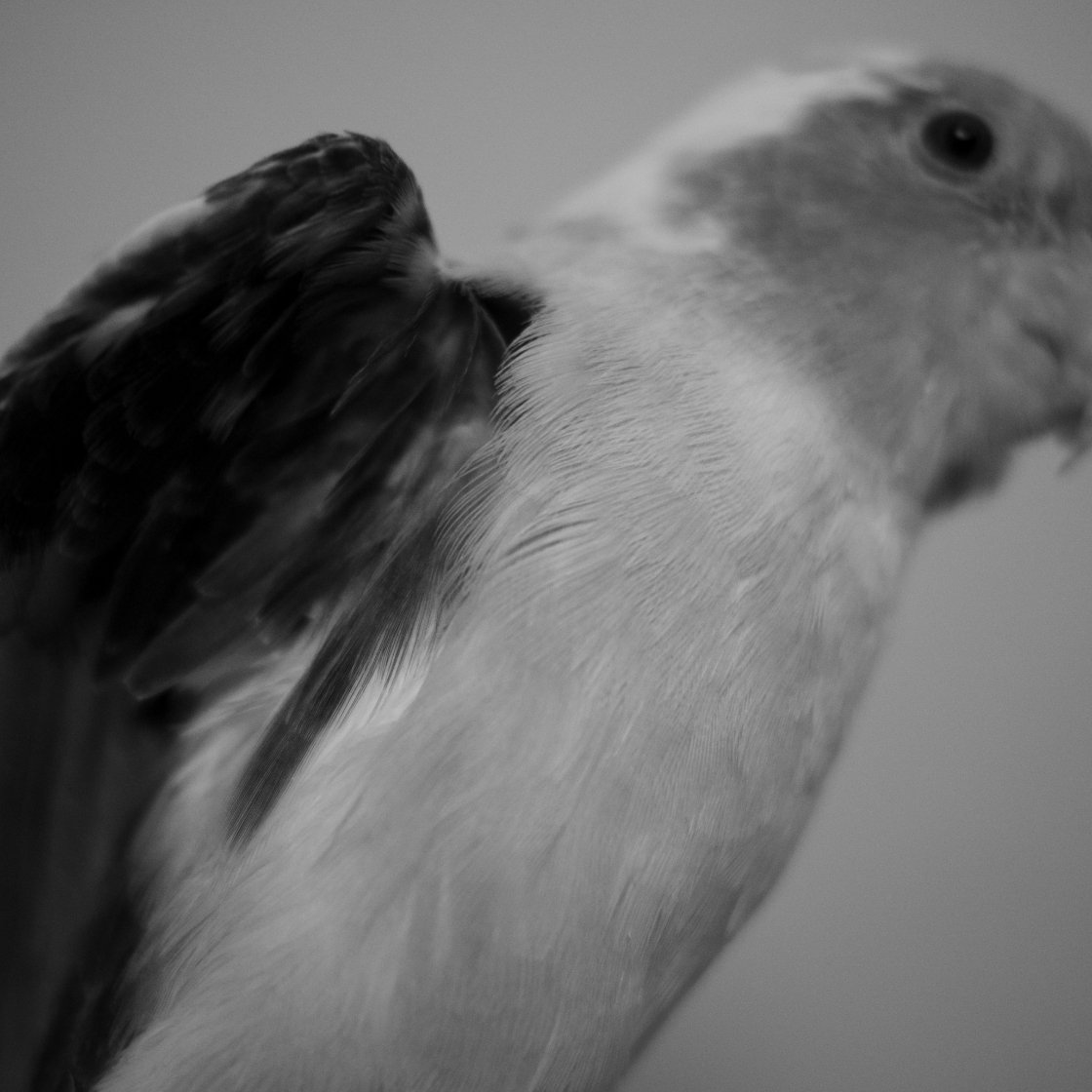
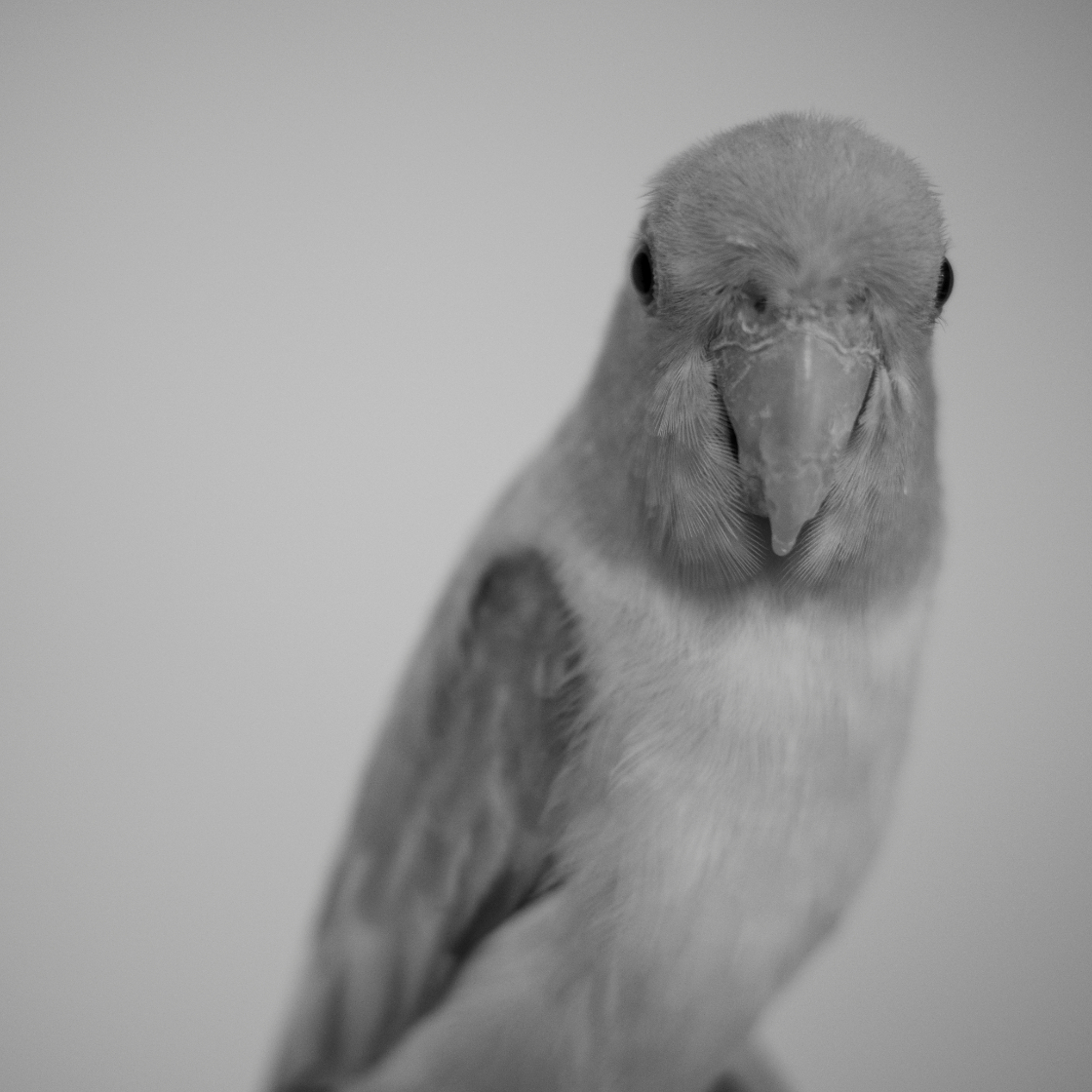
That said, I’ve hardly ever taken photos of them. Maybe it’s because I feel like I can take them anytime. Or maybe just watching them is enough. I rarely point a camera at them, though I might snap a photo with my smartphone every now and then.
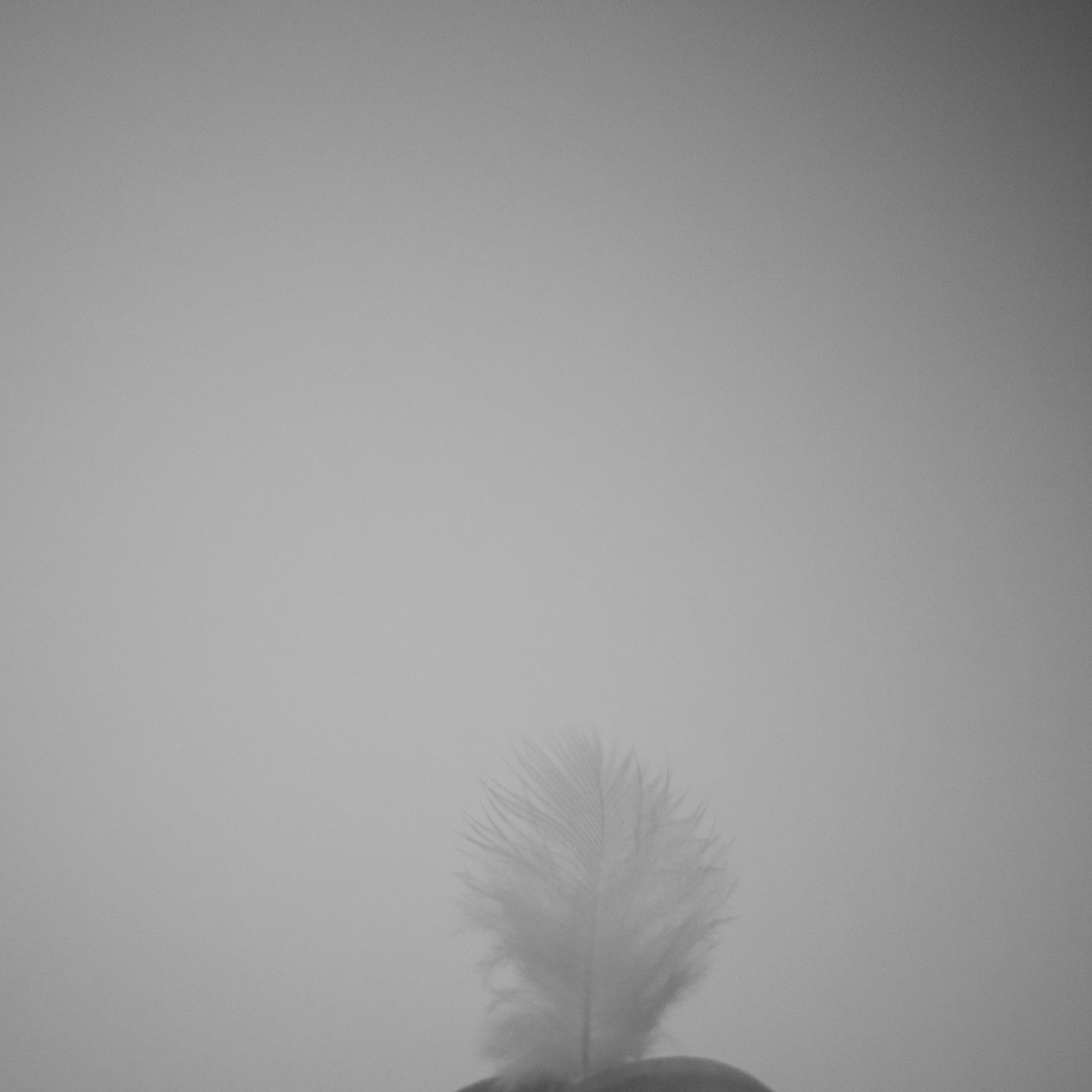
This time, I tried using the macro mode to take their pictures. They usually won’t stay still for long, but they surprisingly didn’t move when I aimed the camera. Maybe it was out of caution. I set the aspect ratio to 1:1 and the image mode to black and white.
How could I make these small, fragile creatures, who usually perch on my shoulder or waddle across the table, look photogenic? Keeping that in mind, I experimented with various approaches: portrait-style shots, shots emphasizing the feather textures, and even shots that were deliberately out of focus. They turned out to be surprisingly picturesque. But it will probably be a long time before I point my camera at them again.
Kisei Kobayashi
Born in Nagano Prefecture in 1968. Graduated from the Photography Technology Department of Tokyo Polytechnic University Junior College. Worked as a newspaper photographer before becoming freelance. Travels extensively throughout Asia to create his work. In recent years, he has been photographing festivals within Japan and his hometown Suwa. He is the author of numerous books, including “Primitive Cries in the Night”, “Deep Silence” and “shasin wa wakaranai (Photography Is Incomprehensible)”. His latest book is “shashin no kotae (The Answer in Photography)” (December 2025). He received the Japan Photographic Society Newcomer Award for the photobook “DAYS ASIA”, the Tadahiko Hayashi Award for the exhibition “The Boats from Far Away” and the Ina Nobuo Award for the exhibition “Cyber Modernity”. His debut film as director was “Toi and Masato”.